
They say no democracy in world history has lasted more than 250 years. They say possible flaws in the United States Constitution could endanger the country’s democracy.
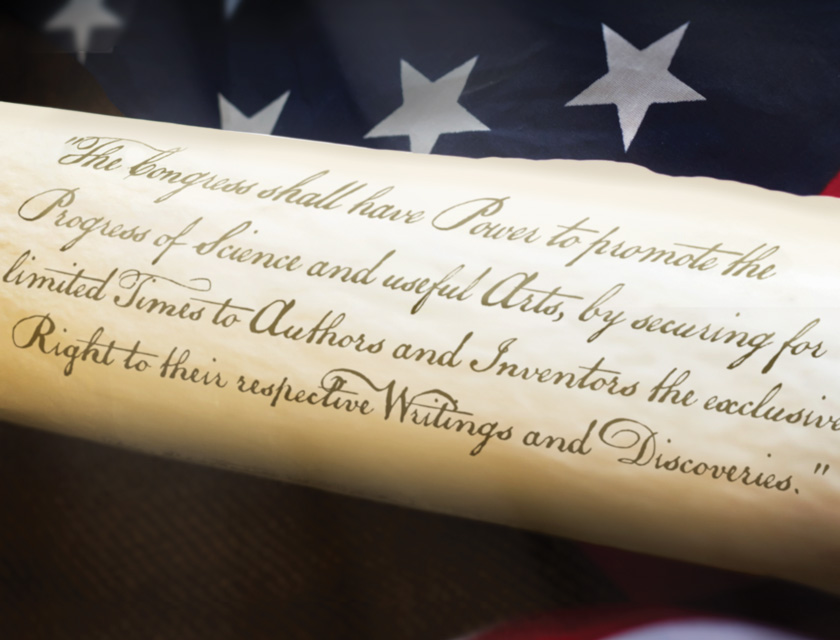
Whether those theys warrant a yea or a nay is a subject for another magazine. But Article 1, Section 8, Clause 8 of the Constitution is not one of those perceived flaws.
The historic declaration featured on this Inventors Digest cover is as American as apple pie for 5 bucks if you download the app. It was prescient; its footprint remains omnipresent. And it should be an important component of America250 celebrations as we honor the country’s unparalleled penchant for ideation, while developing and refining products and processes that improve our way of life.
This august July occasion is a time to reflect on inventing’s impact, from the era of our Founding Fathers to today’s rapidly escalating technological achievements that add to our convenience (and confusion).
All of it reflects an innovative spirit that remains timeless now and likely forever.
Underrated Whitney
Though much has changed in inventing during the past 250 years, the basic concept of solving a problem or meeting a need before anyone else remains the same.
America’s first golden era of inventing featured innovation pioneers tasked with building the infrastructure and foundation of a new country. Remember, America was born 100 years before the first automobile or telephone, and 150 years before the U.S. highway system or television.
For all the deserved recognition historically lavished on Founding Fathers and inventors Thomas Jefferson and Benjamin Franklin, it can be argued that Eli Whitney had the most innovation impact.
His cotton gin in the early 1790s revolutionized the cotton industry—still powerful today—by efficiently removing seeds from cotton bolls. (Many historians say Catharine Littlefield Greene—who invited Whitney to visit her plantation to show the difficulty of cleaning short-staple cotton by hand—contributed important ideas to the cotton gin’s design.)
The cotton gin’s reverberations were numerous and long-lasting.
The resultant increased supply of raw cotton spawned the expansion of textile mills in the North and the United Kingdom, which connected U.S. agriculture to global manufacturing; it also was one of the earliest American successes of the First Industrial Revolution, as the United States was transforming from manual labor, farm work and handicrafts to mechanized production. One unintended consequence was that the invention’s role in boosting cotton production intensified the demand for slave labor, a primary issue leading to the Civil War more than a half-century later.
Later in the 1790s, Whitney’s contract to make 10,000 muskets introduced the concept of standardized, interchangeable parts—creating mass production that remains the bedrock of U.S. manufacturing.
No time to wait
By then, America’s patent system was in full gear. President George Washington signed the Patent Act of 1790 and didn’t waste any time: This happened 49 days before Rhode Island became the last of the original 13 states to ratify the U.S. Constitution on May 29, making it the official governing document of the United States.
Maybe Rhode Island leaders weren’t even aware that a Patent Act had been signed. The snail’s pace of communication in America got two jump-starts in the 1800s with the invention of the telegraph by Samuel Morse in 1835 and naturalized U.S. citizen Alexander Graham Bell patenting the telephone in 1876.
Bell’s U.S. Patent No. 174,465, for an “apparatus for transmitting vocal or other sounds telegraphically,” is the reason you may be reading this story on your cellphone (invented in 1973). The latest available tally for the number of active cellphone patents in America, in 2012—14 years ago? Isn’t this supposed to be the information age?—was 250,000.
The kaleidoscopic range of U.S. innovation in the first half of the 1800s is on display via Christian Schussele’s 1862 painting, “Men of Progress,” at the the Smithsonian’s National Portrait Gallery in Washington, D.C. (or online at The Smithsonian’s National Portrait Gallery: npg.si.edu/learn/classroom-resource/men-progress).
Schussele, a France-born American, depicted 19 famed U.S. inventors and creative thinkers. Among them:
• the aforementioned Morse, who also contributed the encoding telecommunications system named after him;
• Peter Cooper, builder of the first American steam locomotive;
• Cyrus McCormick, inventor and manufacturer of the reaping machine and other agricultural equipment; and
• Charles Goodyear, who created the vulcanization process that made rubber useful.
The Second Industrial Revolution (1870–1914) brought the iconic Edison incandescent light bulb in 1879 and automaker Henry Ford’s assembly line (about 1913)—the latter changing how Americans work and facilitating mass production of goods. The transportation of people and goods soared to unforeseen heights following the Wright brothers’ first-ever controlled, sustained, powered flight of a heavier-than-air aircraft on December 17, 1903.
The invention of the electric motor enabled the use of electricity to power machinery, furthering America’s industrial efficacy and might. New refrigeration technology revolutionized food preservation and storage. (The subject of who invented radio remains hotly debated, although naturalized American Nikola Tesla was granted patents for a complete radio communications system in 1900 and vindicated by a 1943 U.S. Supreme Court ruling several months after his death.)
A shift in control
As the early 1900s moved toward midcentury, America’s status as a world inventing powerhouse was big business that increasingly became the domain of—big business.
While generally positive for corporate bottom lines and the country’s economic health, this shift often left independent inventors on the outside looking in when it came to selling their inventions or defending them in court. Such ramifications and associated challenges, which linger to this day, are the subject of much reporting and comment in this magazine.
Jerome Lemelson, iconic 20th-century inventor and the subject of an informative and poignant Inventors Digest cover feature in October 2025, struggled much of his career because of this. Rob Lemelson wrote that his father was born a little too late.
“My father grew up during the rise of corporate consolidation of the innovation process—when large corporations began to play a dominant role in inventing and patenting products and technology.
“Corporations had what Jerry called the ‘Not-Invented-Here Syndrome.’ He observed that they were rarely open to inventions and product ideas from outside their own organizations, even if they were directly relevant to their existing or planned product lines and could transform the bottom line.
“Corporate titans like Henry Ford were infamous for ordering their attorneys to squash independent inventors and their intellectual property claims like bugs.”
Not just capitalism
Big business’s voracious appetite for much (and too much) of the inventing pie is often explained as a natural, though unseemly, byproduct of America’s capitalist system. Inventing and capitalism are often viewed as synonymous.
Inventing in America is a driver of many things and the result of many things. It fuels our capitalist system by rewarding creativity and entrepreneurship in tangible ways.
But if you think invention = capitalism, go back to the whiteboard with an eraser. This misses the overall equation in terms of innovation’s expansive reach. And capitalism is not the only source of innovation.
Invention stems from our human need—absent any economic system—to make the world better. This long predates even the faintest notion of capitalism.
Inventing has existed and thrived under communism, socialism, even feudalism.
During the Golden Age (8th–14th centuries), Baghdad and scholars conceived breakthroughs in mathematics (including algebra), medicine and engineering. They founded the first modern hospitals and universities. They invented early forms of coffee and the camera.
Even today’s most iconic products are not solely attributable to staggeringly wealthy big businesses. The smartphone, for example, relies on research paid for by governments or universities.
Capitalism can also distort what our inventive priorities should be. Too often, time, money and precious resources are disproportionately devoted to what makes money at the expense of what has greater health and social benefits—the latter an early tentpole of ideas and inventing.
IP holds the keys
American inventing ingenuity remains indigenous to our way of life, responsible for everyday staples of the past 100 years from television to the personal computer to the aforementioned cellphone. (The true inventor of the internet may be impossible to determine, having evolved over time, but is said to have originated in the late 1960s as a U.S. military defense system.)
Why we invent hasn’t changed, but how we protect our inventions and our ability to do so are at the mercy of newer laws regarding intellectual property protection and changes in how they are implemented.
The America Invents Act of 2011, which changed America from a first-to-invent country to first-to-file, was intended to align the United States with international standards. But its introduction of post-grant review and inter partes review to challenge patents more efficiently has been widely criticized as detrimental to independent inventors in favor of deep-pocketed corporations.
No patent-challenge process or entity has received as much public ire as the AIA’s Patent Trial and Appeal Board, established to “improve patent quality, reduce litigation costs, and provide a faster, more accessible alternative to federal court for challenging patent validity.” Its nickname as the patent “death squad” hovers despite recent successes by United States Patent and Trademark Office leadership to help balance the ledger.
These evolving guidelines and standards for protecting patents of independent inventors will be instrumental in determining the future of inventing and its role in our economy and our lives—whether America remains a democracy or becomes something else.