
-
Save
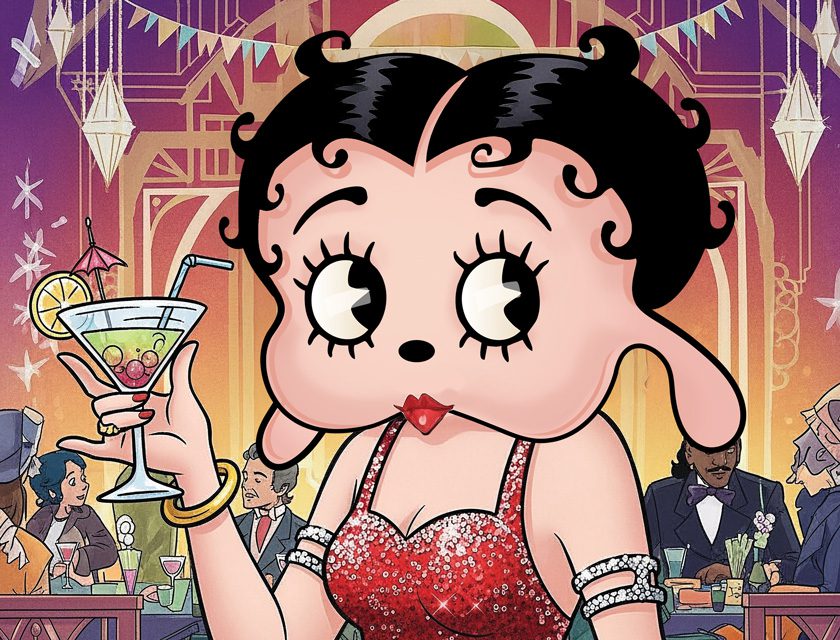
The iconic cartoon character Betty Boop entered the public domain when the clock struck 12 a.m. on January 1 in the United States.
Well, kind of.
Uh, no, not at all, according to the company said to hold Betty Boop’s licensing rights.
Welcome to the annual confusion and opportunity of Public Domain Day—the New Year’s Day occasion for which select creative works no longer are subject to copyright restrictions and become ripe for anyone to use for commercial purposes.
Betty—or more accurately, her earliest incarnation—is among many works from 1930 now in the public domain.
Joining her in the cartoon animation realm are two Walt Disney shorts featuring early versions of Pluto, and the first appearances of Chic Young’s Blondie.
In other creative arenas, the first Nancy Drew mystery, The Secret of the Old Clock, and the movie Animal Crackers are among those now PD eligible.
They are joined by a slew of classic vintage films, books and sound recordings.
Selected availability
As Inventors Digest reminded you in its February 2025 cover story featuring the earliest version of Popeye—and as we have seen with Mickey Mouse and others—the first appearance of a character entering the public domain does not mean all subsequent iterations of the character are instantly fair game for the public.
“Creators should proceed with caution,” said Andrea L. Arndt, a member of the Intellectual Property Practice Group at Dickinson Wright in Austin, Texas, who debuts as a regular contributor with Inventors Digest this month.
“While using the 1930 version is legally permissible, incorporating features from later designs, such as the humanized face or signature style, could result in infringement claims under copyright or trademark law.
“Companies have mastered the art of intellectual property longevity. They modernize characters, register trademarks and create new copyrighted works to maintain control. This is a sophisticated strategy that effectively extends exclusivity well beyond the original copyright term.”
Betty Boop’s earliest incarnation, a bit role in 1930’s Dizzy Dishes movie, was a weird amalgamation: half flapper, half poodle.
It/she had floppy dog ears, large jowls and a small snout, with spit curls—but looked human from the torso down.
In fact, Fleischer Studios, the company that claims to hold Betty Boop’s licensing rights, refers on its website to that 1930 entity as “the character that would eventually become Betty Boop” and therefore not in the public domain.
However, the features of that character are unmistakably Boop.
Furthermore, according to Aaron Moss’s story on copyrightlately.com—widely quoted in many internet stories about Public Domain Day and the unofficial, official expert source:
“The (Fleischer) studio’s confident assertions are also curious given its own legal history. In Fleischer Studios, Inc. v. A.V.E.L.A., Inc. (2011), the Ninth Circuit agreed that Betty Boop is a ‘separate copyrightable component’ of the films in which she appears—but held that the present-day Fleischer Studios couldn’t prove it actually owned that copyright.”
“Establishing ownership of older copyrights is notoriously difficult without proper documentation,” Arndt said.
“For companies and creators, this highlights the critical importance of maintaining a clear chain of title.
“Copyright assignments, written contracts and agreements are essential for long-term intellectual property security. One of the most effective methods to prove ownership is registering the work with the United States Copyright Office. Registration creates a public record and serves as prima facie evidence of ownership, which shifts the burden of proof to others to demonstrate that you are not the rightful owner.”
In a story headlined The Upcoming War Over Betty Boop, Plagiarism Today noted that the controversy will likely all be moot soon anyway: The human version of the character will enter the public domain two years from now. Any lawsuit filed now would probably not conclude in time.
“However,” Arndt said, “the outcome of such litigation would be instrumental in shaping legal precedent in this area. Courts rarely have the opportunity to clarify the boundaries of character rights, and any decision would influence future disputes.
“Even when copyright protection expires, trademark rights remain enforceable. If Fleischer Studios or its successors maintain active trademarks for Betty Boop’s name, likeness or associated branding, those rights can prevent unauthorized commercial use. Copyright expiration does not override trademark law.”
Hollywood horrors
Plagiarism Today said the 2011 ruling “puts the Betty Boop character in a very strange place.”
Not nearly as strange as where it’s headed next.
Get ready (or not) for Boop, a horror film version of the character by VMI Worldwide to be, uh, executed by Furst Class Productions.
The synopsis:
“A team of horror podcast investigators breaks into an abandoned theater to discover the hauntings of the starlet once known as Boop. A simple investigation turns into a horrific bloodbath as they fight to escape the murderous Boop, as she is out for revenge.”
Co-producer Jarrett Furst said in a statement, “When I learned this cartoon was entering the public domain, I knew there was something special waiting to happen. … Get ready for a wildly violent, ridiculously fun ride … and trust me, this is only the beginning.”
Ah, but the process of turning adorable into abominable, post-public domain, has already begun.
Arndt noted that “This concept is reminiscent of the 2023 horror film Winnie-the-Pooh: Blood and Honey, which transformed a beloved children’s character into a feral killer. Despite its low-budget production, the film achieved significant popularity, spawning sequels and a merchandising wave that included novelty apparel and collectibles.”
The movie “has garnered a significant amount of attention and has become an instant cult classic among horror fans. Despite its controversial premise and low-budget production, the film has found a dedicated audience and has been embraced for its unique take on the beloved character.
“The film’s popularity is attributed to its high camp and kitsch factor, amateurish acting, and the promise of one type of film but delivering something different. The film’s so-bad-it’s-good appeal, coupled with clever marketing, has contributed to its cult classic status and financial success.”
Arndt predicted that the horror adaptation of Betty Boop will likely achieve similar cult status.
“Given the character’s cultural significance, derivative works may proliferate across multiple genres, including adult entertainment.
“Public domain entry often triggers a surge of creative experimentation, for better or for worse.”
She also forecasted an AI-related possibility that may or may not be scary.
“As artificial intelligence tools become mainstream, expect a surge in derivative works based on public domain characters. The challenge will be determining originality and authorship when algorithms remix existing content. This will push copyright law into uncharted territory.”
The copyrightlately.com piece stands as the best-researched and most authoritative accounting of 2026 Public Domain Day—and the funniest.
Noting that the Watty Piper classic children’s book The Little Engine that Could joined the PD list this year, Moss wrote:
“I started working on a follow-up called The Little Engine That Couldn’t Be Bothered, but I don’t think I can finish it.”