The most important inventions rarely begin with certainty.
They begin with discomfort—and in this case, with fatherhood.
For G-Jay Yong, that moment came when his 2-year-old daughter struggled to pick up and use his 2kg Canon DSLR camera. What he saw became the first SKU for his camera designed specifically for children, which has morphed into myFirst: “The World’s First Kids Tech Ecosystem.”
At the time (2017), there wasn’t really a proper kids’ tech market; choices were either overly complex adult devices or flashing-lights-and-plastic toys. For Yong, the lack of truly creative kids tech, combined with parental demands for control, signaled a clear market opportunity.
“That’s where I decided to develop an ecosystem of products to help kids explore creativity,” he said, “while enabling families to develop healthier tech habits together.
“I call it the ‘Explore Together’ mindset.”
When his daughter requested a smartwatch, his concept expanded. Yong understood what many parents—and frankly, many product developers—don’t fully confront: the fact that giving a child a connected device isn’t just a purchase decision. It’s a philosophical one.
It’s about access, exposure and control in a world where even adults struggle to manage their own relationship with technology.
That tension didn’t just spark a product. It sparked a category.
Major mindset shift
Before myFirst, Yong wasn’t chasing trends. He was building systems.
An unusually ambidextrous-brained human, his schooling was in electrical and computer engineering; he also excelled in the creativity and functionality of architecture.
His early career was deeply technical, focused on solving problems at the component level. But while still in university, something shifted as people problems became a primary impetus and technology second.
That curiosity turned into his first company, Singapore-based Gajah International. The hardware incubator business eventually scaled to $80 million in revenue, producing e-book readers like InkCase and operating at a global manufacturing level.
The results marked a highly unusual feat for a first try in entrepreneurship: He had no MBA, not even any formal business training.
The leap from builder to founder is not an easy transition for most. Some never make that jump. For Yong, it was a mindset shift—from focusing on making a widget itself to focusing on a problem for a specific population—then developing and owning the entire system around it.
First insight: The market
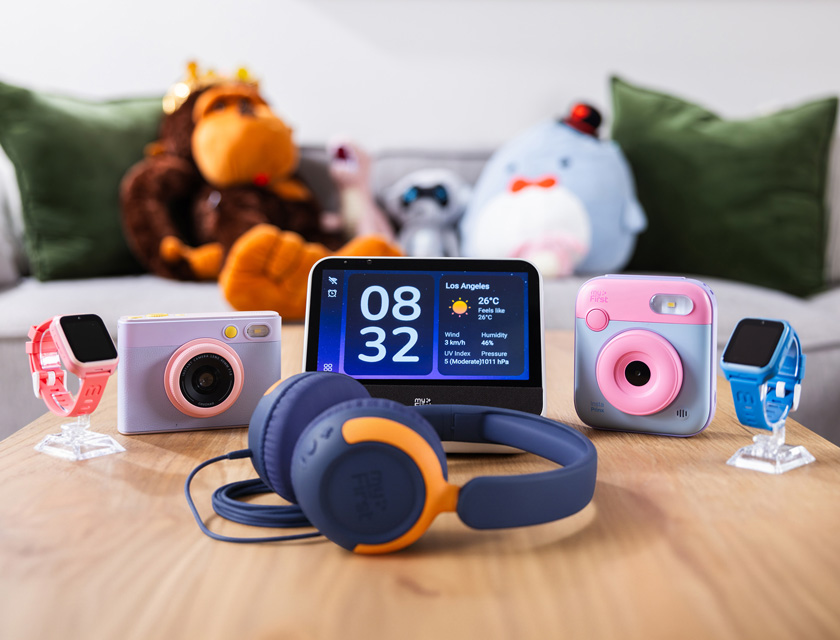
That moment when his young daughter wanted to create with his camera required a rethinking of everything: how a camera fits into little hands, a growing mind that needed guidance. His myFirst Camera didn’t just shrink an adult device but rethought the product entirely:
• A highly tactile, rubberized form that fits in small hands.
• Bright, expressive colors that touch kidster emotional nerves.
• Instant printing features to serve the way kids engage with physical output differently than adults.
The real inflection point came when he noticed that kids crave adult tech but cannot be fooled by baby toys. They wanted something that functions in the real world. But parents want a sense of safety for them as they emerge into that wild world.
Yong’s “Eureka Moment” eventually defined the company’s trajectory.
Parents don’t want less technology for their kids; they want better technology. The issue wasn’t screen time; it was how children were being introduced to digital environments.
That insight reframed everything. Instead of adding parental controls to existing systems, his company built an entirely new ecosystem:
• A closed, family-approved social network app called myFirst Circle.
• Messaging limited to trusted circles.
• Real-time parental alerts when boundaries are tested (imagine that, parents!).
• Instant parental permissions.
Anyone with children knows the fears of letting them freely explore in an unsupervised environment, especially a digital one. On the flip side, the point of growing up is to individuate, away from restriction. myFirst was built around guided access, not limitation.
The brand says what it does. myFirst is about a child’s first click—on safer terms.
The slogan “Explore Together” is a philosophy that encourages families to guide how kids use technology rather than limit it entirely, fostering healthy digital habits.
3-generation check-in
In my world as leader of a PR company, where I help launch consumer products into highly competitive retail environments, there’s a constant truth: The user is not always the buyer.
But myFirst does a great job of narrowing its target through a few levels of complexity.
Kids want freedom.
Parents want control.
Grandparents want to delight the kids, stay connected—and respect the boundaries set by parents.
Yong’s approach was to design for all of them, via consistent check-ins with each. This started with peer-parent conversations with friends, and eventually a more formalized query process with paying customers.
“We interview both kids and parents constantly,” he said. “You can’t fully satisfy both. You have to strike a balance.”
This defined a product that has enough freedom to engage kids and enough structure to reassure their caretakers.
For inventors, this is one of the hardest—and most valuable—lessons: Look beyond the end user. It may be that your product serves opposing stakeholders.
Design for the user and market to the buyer. Your job isn’t to choose a side; it’s to architect the relationship between them.
What didn’t work
Life’s most significant lessons come in the form of what we might call failure.
Entrepreneurs—the tenacity-makers of the world—may loathe talking about those moments, as everyone prefers the shiny successes. But behind every polished product is a series of imperfect decisions and messy realizations.
Yong is candid about what didn’t work for him: trying to do everything internally; waiting for the “right” moment; overthinking early-stage decisions.
“What doesn’t work is overthinking everything. You have to move forward and adjust.”
His approach evolved into a practical list that others can use: Keep the core product and vision in-house and stay flexible with everything else; make decisions quickly, even if they’re not perfect; adapt operations as you scale.
Manufacturing in particular became a real-time lesson in adaptability—shifting production and building infrastructure quickly to meet demand, even when the system wasn’t fully optimized.
For inventors, this takeaway is often terrifying but could not be any more poignant: Speed compounds. Perfection stalls.
Go-to-market strategy
In today’s startup environment, the default advice is often: go direct to the customer, build your brand online, control the funnel.
Yong went the other way.
He chose B2B retail. Partners like Walmart, Sam’s Club, Best Buy and others became core to the company’s distribution strategy.
Why?
Because retail does something DTC does not: It creates immediate trust. And for this particular customer—parents buying technology for their children—that trust is everything. That trust now expands to one million families spanning 60 countries.
As someone who has spent decades placing products into those exact environments, I can tell you: Retail is not the easy path. It’s (very) expensive. But it is often the fastest path to legitimacy.
Having such established corporate partners yields other benefits that further strengthen myFirst while redefining how kids experience technology, safely and purposefully.
In March the company announced that it has raised over $8 million in its Series A funding round, led by Vertex Ventures Southeast Asia & India. This allows myFirst to “deepen its Kids Tech ecosystem, bringing together devices, connected services, and a secure social platform to support a child’s first digital experiences across communication, creativity, and self-expression.
“The company will expand its presence across North Asia, the Middle East, the United States and Europe through retail and telco partnerships with partners such as Walmart and Best Buy, while enhancing myFirst Circle as a closed, ad-free social network designed specifically for children.“
Team building
One of the most overlooked transitions in a founder’s journey is hiring.
People are complicated. Every entrepreneur I’ve known will tell you that people will never stop astounding you with surprises.
The best leaders delve deeply into their own strengths and weaknesses to better see the right people, instead of hiring those they simply like. This is a master class in and of itself.
Yong started as an internally driven, introverted engineer. But building a company required something entirely different that he successfully learned to do, by just doing it.
“I had to hire people who complemented my skill set. Operations. Business development. Growth. And—learning when to step back.”
As the company grew, his role shifted from builder to leader. But he remained close to product decisions, using his technical background as an anchor while expanding the organization around him.
For inventors, this is often the breaking point: You are not building a product. You are building a system—and systems require people.
The people of our future
Globally, there are an estimated 700 million to 900 million children between ages 5 and 12, all in Yong’s customer profile. These kids represent nearly a billion young users entering their first meaningful interactions with technology.
This age group sits at the critical intersection of curiosity and habit formation, where first devices like cameras, watches and tablets are introduced and where digital behaviors, boundaries and expectations are established—making it one of the most important and underserved segments in consumer tech.
Yong is one of the players scratching that itch in a responsible way—and a colorful, untraditional one to boot.
What makes myFirst compelling isn’t just its product line but its philosophy. In an industry driven by more connectivity, more engagement, more features, Yong has built a company not around less, but around better: better technology for children that reduces exposure, chaos and risk while introducing the digital world in a guided, age-appropriate way where freedom and safety coexist.
In doing so, he created something far more valuable: Trust.
This is where Yong’s story lands for inventors. If you look at the world’s most successful brands, every one is about the customer they serve, not just another new cool thing.