According to the Next Move Strategy Consulting (nextmsc.com), the U.S. disabled and elderly assistive device market size is predicted to reach $10.97 billion by 2030. Teachers, occupational therapists, physical therapists and others are trying to make life easier for their clients, as we’ve seen here in Inventor Spotlight: EaZyHold (January 2023), RestAngles (August 2023), and others.
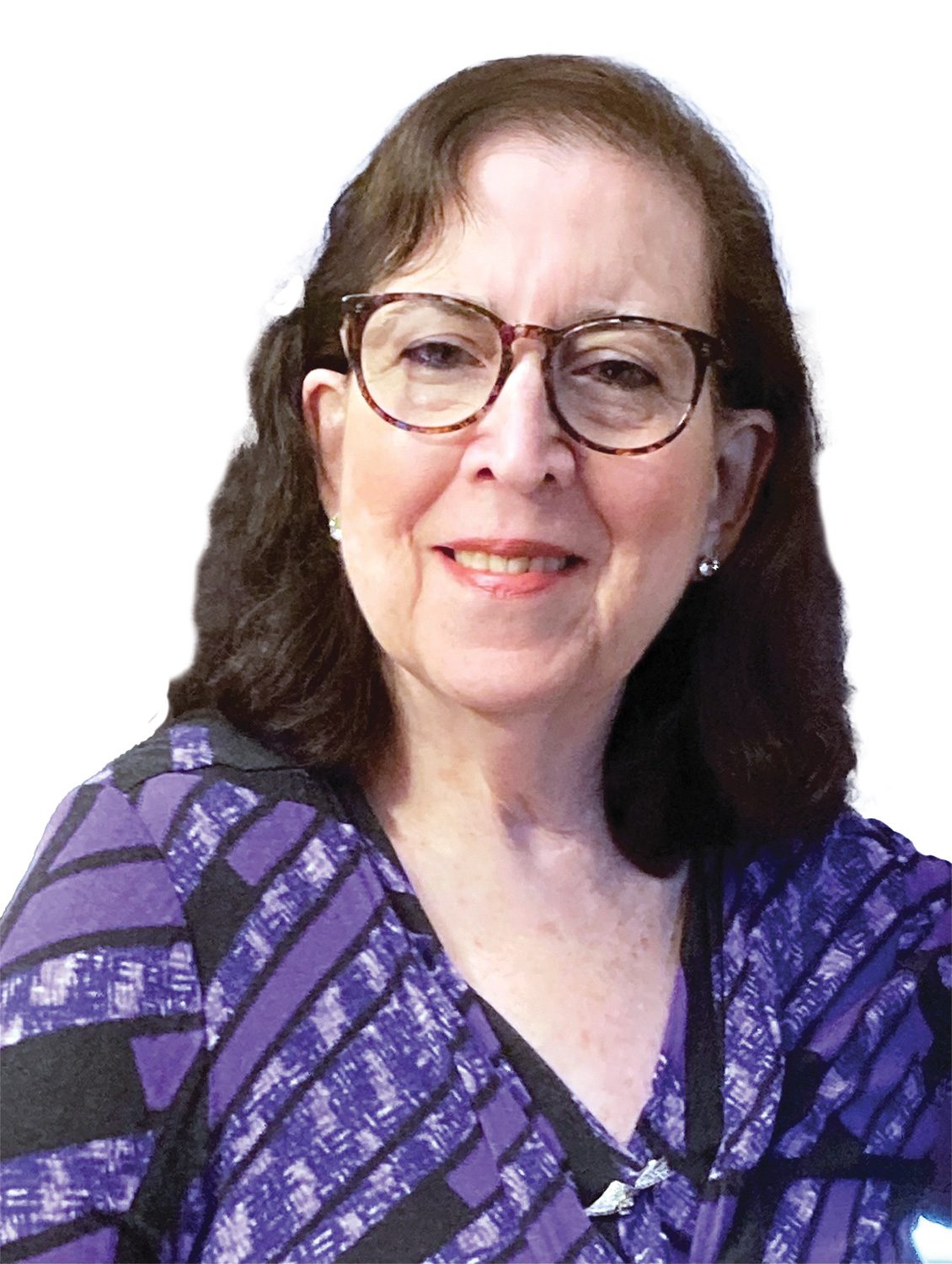
Here’s the story of functionalhand® by Thera-Solutions, the first invention for Celine Rosati Skertich and Linda Merry of Illinois. Skertich is a physical therapist who lives in Western Springs with her husband, Joe; Merry is an occupational therapist and lives in Elmhurst with her husband, Bob.
EGT: How did functionalhand come about?
Celine Rosati Skertich (CRS): In 2018, Linda and I founded Thera-Solutions, LLC, with a mission to design programs, teach courses and develop materials supporting individuals with disabilities to participate in fun, functional activities they love. While outlining our goals for the upcoming year, Linda mentioned she had always wanted to invent something.
It was not hard for me to determine what that “something” should be. For years, as part of her therapy sessions, Linda was creating handles on everyday items such as a paintbrush, a marker, a crayon or feeding utensils so that her clients with grasp difficulties could use the gross grasp [all fingers squeezed around an object] to play and participate with their family and peers.
Each of the items was a different size, and given the impairments of the clients using them, the items had to be securely held in the handle. This meant a separate handle was required for every item the client wanted to use. Recognizing the potential to make these adaptive solutions widely available, thereby supporting our mission, the concept for the functionalhand was born.
EGT: How does it work?
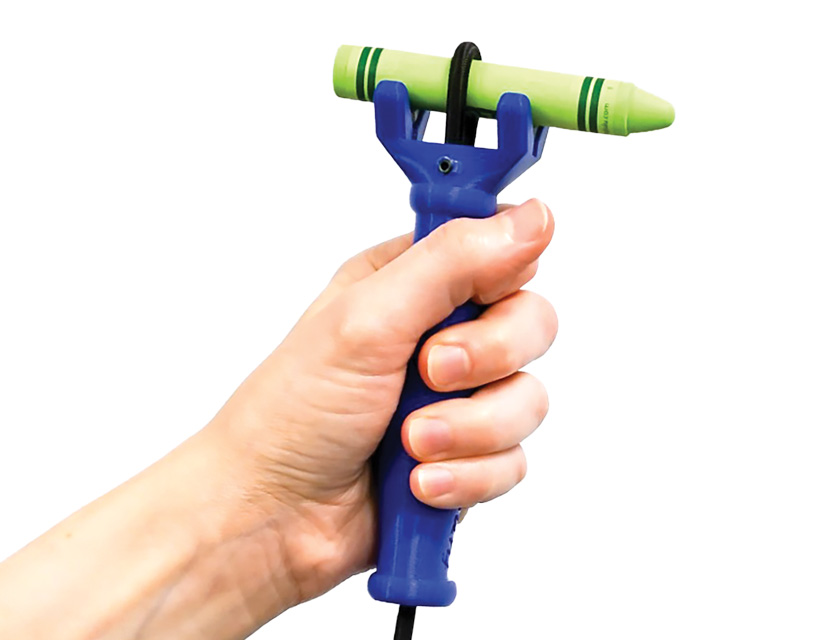
CRS: The functionalhand features an ergonomically designed handle with an elastic cord running through it. At the top of the handle, V-shaped channels that are spaced approximately 1 inch apart hold items in place.
To secure an item, the cord is pulled over it, threaded down through the handle and tightened at the base of the tool. Rubber bumpers line the V-shaped channels to prevent slipping. The elastic cord stabilizes the item vertically (along the Y axis), while the rubber bumpers provide horizontal stability (along the X axis).
EGT: What is the functionalhand made of?
CRS: It is augmentatively manufactured of PLA filament—a safe, polylactic acid biodegradable thermoplastic derived from plant-based renewable resources.
EGT: What are advantages over similar assistive devices?
CRS: The functionalhand is in a class of rehabilitative health care devices known as “universal cuffs.” Most universal cuffs only hold one object, such as a writing tool or feeding utensils. The functionalhand:
- Holds a variety of everyday objects as small as a toothpick to as large as a 16-oz. water bottle;
- Securely holds objects in the vertical or horizontal orientation;
- Has an ergonomically designed handle to support the anatomy of the hand and promote more efficient upper extremity movement;
- Is dishwasher safe.
EGT: Where are you manufacturing?
CRS: The functionalhand is manufactured, assembled and packaged in the U.S. Thera-Solutions, LLC distributes the functionalhand from its business base in Elmhurst, Illinois.
EGT: Please share a bit about that experience.
CRS: We had quite a learning curve when it came to the design of our tool. We needed to meet a variety of parameters: safety, size and weight, given our end users are children and adults with disabilities; versatility to hold a variety of objects in multiple orientations; ergonomics; and stability to ensure items were securely held in the tool, because many of our end users have movement impairments.
Initially, we collaborated with a SCORE (Service Corp of Retired Executives) mentor, as well as my brother-in-law, an inventor with five machine patents. We attempted to design a circular handle akin to the handle Linda created; however, we encountered challenges with slippage and the goal of creating a universal tool adaptable to a variety of objects.
To further explore design possibilities, we consulted with Ted Corlett, Sr., an 88-year-old retired engineer who was also my son’s grandfather-in-law. Ted examined our design and problem-solved a solution with us that significantly influenced our design. He then created a CAD design and 3D-printed our first prototype, laying the foundation for what became the functionalhand.
The current design of the functionalhand closely mirrors our original concept problem-solved with Ted, with only structural and minor modifications. To transition to augmentative manufacturing, we bought a 3D printer and initially hired someone to produce our tools.
Facing limitations in printing capabilities, and familiar with the University of Illinois’ Maker Lab through their children’s attendance at the University of Illinois Urbana-Champaign, we identified it as an ideal partner to increase production.
The Illinois Maker Lab was fabricating the functionalhand for about a year and shipping units to Thera-Solutions for assembly and fulfillment. As growth required closer monitoring for consistency and increased production, we decided to invest in the necessary technology to augmentatively manufacture, assemble and package the functionalhand ourselves and distribute it from our business base in Illinois.
Currently, we have two sizes of the functionalhand and sell each size individually, in combo packs or multiple packs. Although we’ve experienced many changes in our manufacturing workflow, it’s been a fun and rewarding journey.
EGT: Is functionalhand patented? Please tell us about the patent process, which will help readers considering products in similar categories.
CRS: Yes. Having patented several products and realizing the unique utility of our tool, Ted Corlett recommended and assisted in a provisional patent application for the functionalhand, which was granted in April 2018. This allowed 12 months for proof of concept in the final design.
Once our final design was complete, and having trialed our tool with many end users of varied ages and diagnoses, we had adequate proof of concept and proceeded with applying for a utility patent.
We discovered through the U.S. Patent and Trademark Office that there are law schools that offer free patent clinics. Our application was accepted by Chicago’s John Marshall Law School, where students assisted in submitting our utility patent application in April 2019.
Weathering the challenges of COVID with the law school closures was challenging but very worth it, because our patent only cost us the filing fees and the fees for required illustrations. We successfully obtained a utility patent for the functionalhand in February 2023.
EGT: From where are you selling?
CRS: Though the functionalhand serves a niche market, it has international distribution, with partners in Australia, Germany, the United Kingdom, as well as 10 partners across the United States. One of our U.S. distributors sells it on Amazon.
EGT: What advice do you have for inventors looking to manufacture an assistive product for the first time?
CRS: Clearly define the problem you want to solve. Research what is already available on the market. Make sure your idea is original and does not infringe on others’ ideas or designs.
Outline the many steps it will take to bring your product to market and how you will manage each of these steps. Make sure you are up to the task! You will need to wear many hats once you bring your product to market.
There are many good resources to help you along the way, such as SCORE, your state SBDC (Small Business Development Center) and your state manufacturing association. Use them! They want you to succeed.